





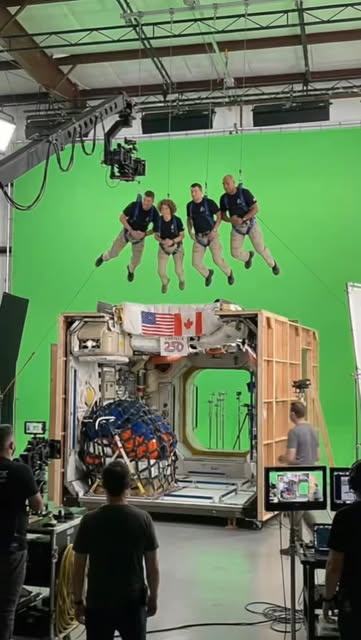


#atlantalashes2.8M posts
Hashtag StatsBased on recent activity
Total Posts
—Avg. Views
3,560,836Best Performing Reel View
17,609,397 ViewsAnalyzed Creators
11Performance Context
Initial Batch12 reels analyzed
Trending Feed
12 posts loaded

2,738,930
🌕📸 Artemis II Saw Earthrise From Behind The Moon Artemis II just sent home lunar flyby photos that show Earth rising above the Moon's far side from a crewed spacecraft for the first time in more than 50 years. The images came during the crew's seven-hour swing around the far side on April 6, 2026, when Orion slipped behind the Moon and lost contact with Earth for about 40 minutes. One frame shows a thin blue crescent Earth hanging over rugged terrain near Ohm crater, while another records a total solar eclipse with a glowing halo around the dark lunar disk. NASA says the crew also photographed impact craters, ancient lava flows, surface fractures, and six meteoroid impact flashes on the shadowed surface. That matters because these are not postcard shots alone; the colors, shadows, textures, and geometry give scientists fresh clues about how the Moon's crust formed and changed over time. The eclipse view matters too, because Orion's position let the astronauts watch nearly 54 minutes of totality and capture a perspective that is impossible from the ground. Artemis II was a test flight, but it already turned the Moon back into a place humans can observe directly instead of only through robotic passes and distant telescopes. If this is what one flyby produced, later Artemis missions could return with even richer surface views, better field observations, and a much sharper picture of the world we are heading back to. Follow @dailyspacestories for more space stories! 🌕 #Space #ArtemisII #Moon #Earthrise #Orion

628,913
🌕📸 1 Flyby Captured Earthrise And Eclipse NASA's Artemis II crew came back from one lunar flyby with Earthrise, earthset, and an in-space solar eclipse all captured during the same April 6, 2026 pass around the Moon. That turns a single mission beat into a set of views that used to feel spread across different programs, different eras, and almost different definitions of what human spaceflight could witness at once. The release is bigger than symbolism because NASA says the crew also photographed the far side as real terrain. They captured long-shadow craters, ancient lava flows, surface fractures, brightness differences, and even meteoroid impact flashes on the lunar surface. Instead of the Moon reading like a flat gray icon beyond the window, these images show it as a rough geologic world with texture, depth, and active evidence that scientists can study directly from a crewed flyby. That matters because human observers are back doing more than looking impressed at the view. They are documenting surface detail, changing light, and orbital geometry from deep space in ways that connect iconic mission photography to actual lunar science. The strangest part is the stack of moments in one sweep: home rising over the limb, home dropping away again, and the Sun disappearing behind the Moon during the same broad encounter. That is why Artemis II feels less like a tribute to Apollo and more like proof that human deep-space witnessing has started again on modern hardware. Follow @dailyspacestories for more space stories! 🌕 #Space #ArtemisII #Moon #Earthrise #Orion

15,154,026
“We do not leave Earth. We choose it.” 🌏 During the lunar flyby on April 6, 2026, the Artemis II crew captured stunning views of Earth and the Moon before and during Earthset, when Earth dips below the lunar horizon. On Earth, parts of Australia and Oceania are visible while the dark portion of Earth is experiencing nighttime. After a planned loss of signal while the Orion capsule was behind the Moon, @astro_christina shared this message as soon as mission control reacquired signal with the Artemis II crew. Her first words? “It is so great to hear from Earth again.” #NASA #Artemis #Earthrise
7,871
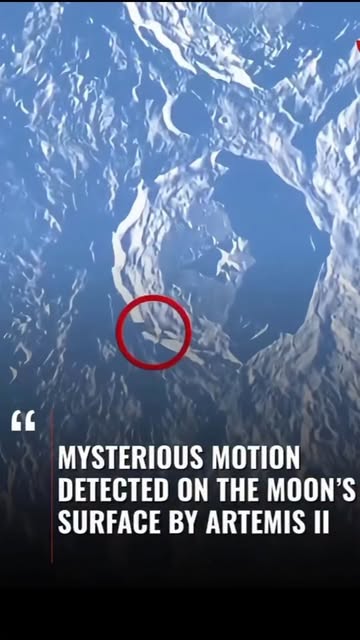
During their historic lunar flyby, the Artemis II crew captured something unexpected—movement on the Moon. As the Orion spacecraft Integrity passed behind the lunar far side, astronauts observed an object traversing the surface in a region long considered geologically dead. Early reports rule out technical glitches and orbital debris. The motion, sources suggest, originated from the surface itself—raising questions NASA has yet to answer. The internet divides quickly: rare geological event, or something else entirely? Because the Moon, as we understand it, doesn't move like that. So what did they see? #nasa #fypage #india #usa🇺🇸

1,232,091
POV: You are watching a earth-set from the most remote seat in the cosmos. On April 6, 2026, the Artemis II crew captured this unedited 8x zoom footage of Earth disappearing behind the lunar horizon. While the mission was officially documenting the flyby with high-resolution sensors, Commander Reid Wiseman used a handheld iPhone 17 Pro Max to record the view through the Orion docking hatch. This specific zoom level is scientifically comparable to what the human eye perceives from this distance. If you listen closely, you can hear the mechanical shutter of the Nikon D5 in the background. Mission Specialist Christina Koch was using a 400mm lens to capture professional 3-shot brackets of the atmospheric limb. Beside her, Victor Glover and Jeremy Hansen were observing from the main cabin windows as the spacecraft traveled at over 8,000 kilometers per hour. This is the first time since 1972 that a human has witnessed the Earth set from the perspective of another world. Will this perspective become normalized in our lifetime? Just imagine. We are no longer looking at maps of the Moon; we are witnessing its reality through the same devices we use every day. If you were in that seat, would you be focused on the professional 400mm lens or would you just stare out the window? Drop your answer in the comments below. Credit~ @astro_reid @nasa #artemis2 #nasa #earthset #spaceexploration #astrophysics

2,442,300
THE FAR SIDE REVEALED: ARTEMIS II MAKES ITS CLOSEST APPROACH 🌖📸 The wait is over. For the first time in 54 years, human eyes have looked down at the lunar surface from just 4,000 miles away. As of today, April 7, 2026, the Artemis II crew is successfully transitioning out of the lunar sphere of influence following their historic flyby. This incredible close-up footage, captured during the "Lunar Observation Period," shows the rugged, crater-scarred terrain of the lunar far side—a perspective that remains hidden from Earth and hasn't been witnessed by people since 1972. Just yesterday, the Orion spacecraft "Integrity" reached its closest point to the Moon at 7:02 PM EDT, passing 4,070 miles above the surface while the crew was in a planned 40-minute communications blackout behind the Moon. During this time, Commander Reid Wiseman, Victor Glover, Christina Koch, and Jeremy Hansen became the first humans to break the all-time distance record, reaching a staggering 252,706 miles from home. They didn't just break the record set by Apollo 13; they redefined the boundaries of our species. The crew is now officially on the "return" leg of their 10-day journey, with the Moon’s gravity having successfully slingshot them back toward Earth. While they move further away from the lunar surface, the data and high-definition imagery they’ve collected will be used to scout landing sites for Artemis III. We are no longer just looking at the Moon as a distant light; we are looking at it as our next home. #Artemis #ArtemisII #NASA #MoonFlyby #DeepSpace #SpaceInsight #LunarSurface #MoonMission #SpaceLaunch #ArtemisGeneration #Apollo13Record #NASAArtemis #ExploreMoon #SpaceEducation #RocketScience #NASA2026 #MoonShot #SpaceExploration #AstroPhotography #SpaceCommunity #LunarFarSide #HistoryInTheMaking #OrionSpacecraft #CSA #STEM #BreakingNewsSpace #LunarObservatory #AstronautView #MoonZoom #BackToTheMoon
1,154,818
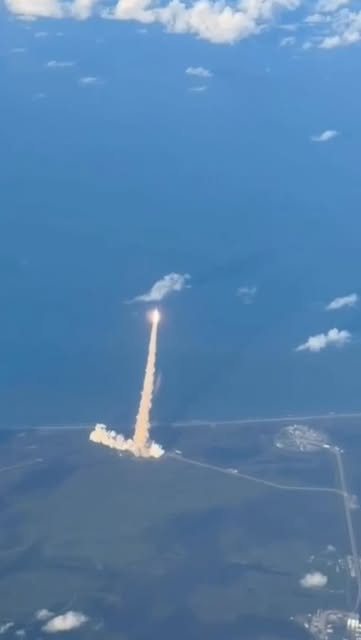
Compilation of the Artemis II mission so far!🚀 The Artemis II mission has progressed largely as planned since its launch, marking a major step forward for human spaceflight beyond low Earth orbit. The Orion spacecraft successfully completed its initial orbit and performed the translunar injection burn, setting the crew on course for the Moon. Early in the mission, minor technical issues such as brief communication dropouts and a small onboard system malfunction occurred, but none posed a serious risk and were quickly resolved. The mission is expected to last around 10 days in total. Next, the crew will conduct a lunar flyby, traveling around the far side of the Moon before heading back toward Earth. The mission will conclude with a high speed reentry and splashdown, testing systems for future lunar landings. Comment 🙌 if you read the caption! Tag a friend who needs to see this!:) ————————————————————— 👉Follow @ourthirdimension 👈 👉Follow @ourthirdimension 👈 For content beyond this earth 🌍 —————————————————————
305,118
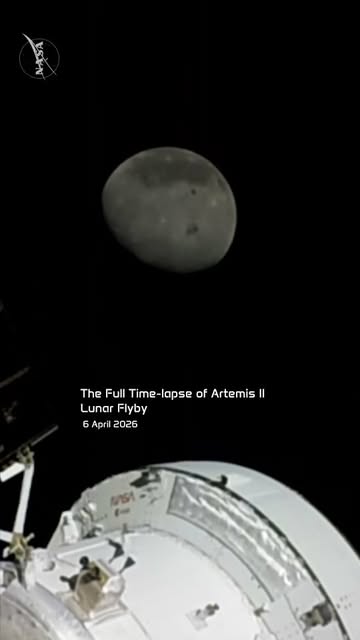
Full time-lapse of the historic lunar flyby performed by the Artemis II crew, Reid Wiseman, Victor Glover, Christina Koch, and Jeremy Hansen, aboard the Orion spacecraft, 6 April 2026 The time-lapse ends as the signal is lost when Orion passes behind the Moon, a blackout that lasts about 40 minutes This mission marks the return of humans to deep space for the first time in over 50 years since the Apollo era. During the flyby, regions of the Moon not previously seen directly by human eyes were captured and documented in detail The Artemis II crew is now on a free-return trajectory that will bring them back to Earth in approx. 4 days Credit: NASA #artemis2 #artemis #spacetravel #orion #integrity

17,609,397
Artemis II mission successfully launched on April 1, 2026, Artemis II is a crewed lunar flyby mission under the Artemis program. Launched from Kennedy Space Center on April 1, 2026, the ten-day mission is intended to carry NASA astronauts Reid Wiseman, Victor Glover, and Christina Koch, along with Canadian Space Agency astronaut Jeremy Hansen, on a free-return trajectory around the Moon and back to Earth. It is the second flight of the Space Launch System (SLS), the first crewed mission of the Orion spacecraft, and the first crewed mission beyond low Earth orbit since Apollo 17 in December 1972. Credit:- Dinkasink @nasa : : : : #Delta #astronauts #moon #artemisll
Top Creators
Most active in #artemis-ii-lunar-flyby-details
Semantic Clustering
Reels Graph Intelligence.
Advanced mapping of high-affinity Instagram Reels semantic patterns identified within the #artemis-ii-lunar-flyby-details ecosystem.
Global DensityHigh Velocity
Affinity Score
99%
#artemis ii
High Reach
Affinity Score
95%
#lunares
Strategic
Affinity Score
95%
#lunar
Niche Entry
Affinity Score
89%
#artemis
High Reach
Affinity Score
90%
#artemi
Strategic
Affinity Score
86%
#ártemis
Niche Entry
Affinity Score
87%
#artemys
High Reach
Affinity Score
85%
#artemis ii lunar flyby
Strategic
Strategic Implementation
Our semantic engine has identified these specific pattern clusters as high-affinity matches for #artemis-ii-lunar-flyby-details. Integrated usage of #artemis-ii-lunar-flyby-details with strategic Reels tags like #artemis ii and #lunares is statistically linked to a significant increase in initial Reels discovery velocity.
In-Depth Hashtag Analysis: #artemis-ii-lunar-flyby-details
Expert Review • June 3, 2026 • Based on 12 Reels
Executive Overview
#artemis-ii-lunar-flyby-details is an actively used Instagram hashtag. Across the 12 trending reels analyzed on this page, the content has accumulated a combined total of 42,730,035 views— demonstrating exceptional viral potential within this content vertical. The top creator ecosystem features 8 notable accounts, led by @__explorenatures with 17,609,397 total views. The hashtag's semantic network includes 8 related keywords such as #artemis ii, #lunares, #lunar, indicating its position within a broader content cluster.
Avg. Views / Reel
3,560,836
42,730,035 totalViral Ceiling
17,609,397
Best Performing ReelUnique Creators
8
12 reels analyzedViewership & Reach Analysis
The 12 reels in this dataset have generated a combined 42,730,035 views, translating to an average of 3,560,836 views per reel. This exceptionally high average viewership indicates that content in this hashtag frequently hits the Explore page or Reels tab, driving massive exposure beyond the creator's immediate follower base.
Top Performing Reel
The highest-performing reel in this dataset received 17,609,397 views. This viral outlier performance is 495% of the average reel performance in this set. This significant gap between the top performer and the average highlights the "viral lottery" nature of this hashtag — breakout hits can achieve massive scale.
Content Overview & Top Creators
The #artemis-ii-lunar-flyby-details ecosystem is dominated by short-form video content (Reels), aligning with Instagram's algorithmic preference for video-first distribution. There are 8 distinct accounts contributing to the trending feed. The top creator, @__explorenatures, has contributed 1 reel with a total viewership of 17,609,397. The top three creators — @__explorenatures, @nasa, and @dailyspacestories — together account for 84.6% of the total views in this dataset. The semantic network of #artemis-ii-lunar-flyby-details extends across 8 related hashtags, including #artemis ii, #lunares, #lunar, #artemis. Creators often use these tags together to reach overlapping audiences.
Discoverability & Reach Potential
The discoverability metrics for #artemis-ii-lunar-flyby-details indicate an active content ecosystem. The average of 3,560,836 views per reel demonstrates consistent audience reach. For creators using #artemis-ii-lunar-flyby-details, high-quality production and strong hooks in the first 1-2 seconds tend to perform best given the competition.
Analyst Verdict
#artemis-ii-lunar-flyby-details demonstrates the hallmarks of a well-performing Instagram hashtag. With an average of 3,560,836 views per reel, the viewership metrics position this hashtag as a premium discovery vehicle. Creators like @__explorenatures and @nasa are leading the charge, setting viewership benchmarks for the community.
Frequently Asked Questions
Everything about #artemis-ii-lunar-flyby-details on Instagram
Live Intelligence
Global Reels Trends
Explore high-velocity Instagram Reels hashtags currently shaping global discovery.
Frequently Asked Questions
How popular is the #artemis ii lunar flyby details hashtag?
Currently, #artemis ii lunar flyby details has over — public posts on Instagram. It is a highly active community focus area for creators and brands.
Can I download reels from #artemis ii lunar flyby details anonymously?
Yes, Pikory allows you to view and download public reels tagged with #artemis ii lunar flyby details without an account and without notifying the content creators.
What are the most related tags to #artemis ii lunar flyby details?
Based on our semantic analysis, tags like #artemi, #ártemis, #artemis ii lunar flyby are frequently used alongside #artemis ii lunar flyby details.