






#espiritu3.8M posts
Hashtag StatsBased on recent activity
Total Posts
—Avg. Views
2,795,316Best Performing Reel View
29,405,148 ViewsAnalyzed Creators
12Performance Context
Initial Batch12 reels analyzed
Trending Feed
12 posts loaded
251,328
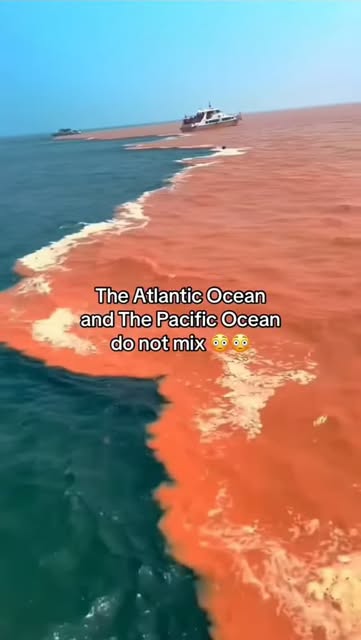
🌊💀 The Ocean Line — Why Atlantic & Pacific Don’t “Mix” 😱🌎 Two oceans meet… But instead of blending — a line appears. At certain convergence zones between the Atlantic Ocean and the Pacific Ocean, sailors have witnessed what looks like an invisible border across the sea. 🌊 Ocean Boundary Line: Two massive water bodies flow side by side 🧂 Salinity Difference: Different salt levels change water density 🌡 Temperature Contrast: Warm and cold waters resist instant mixing ⚖️ Density Barrier: Creates layers (halocline/thermocline effect) 🌪 Current Collision: Opposing currents hold the boundary in place 💀 Slow Blending: They do mix — but deep below and over time 😱 Top Moment: A visible line across the ocean — like two worlds touching This isn’t magic… it’s physics on a massive scale. But to the human eye — it looks like the ocean refuses to blend. 💬 Would you cross a line in the sea that looks like two different worlds? 👉 Follow @seaofterrors for more dark ocean mysteries, hidden science, and extreme sea phenomena. 🎥 Video Credit: DM for credits/removal to the real owner. . . . #oceanmystery #atlantic #pacific #science #fyp

72,091
This is Why Pacific and Atlantic don’t mix with each other. Follow us @explaining__science for more. #science #ocean #pacific #physics #biology #education
15,403
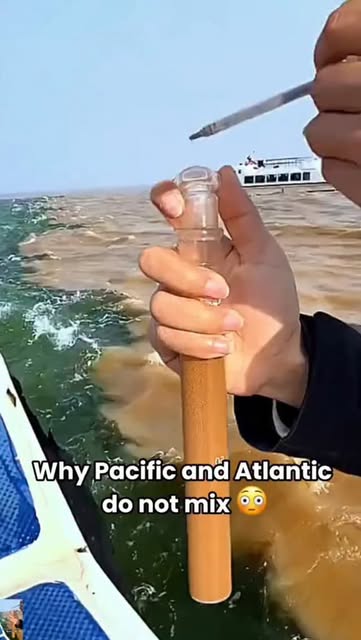
🌊🌎 Why the Pacific and Atlantic Oceans Do Not Mix 😱 It looks like magic… two massive oceans meet but don’t instantly blend together. Here’s why: 💧 Different Salinity – Each ocean has its own salt concentration. 🌡 Temperature Difference – Warm and cold waters resist mixing. ⚡ Density Layers – Heavier water stays separate from lighter water. 🌍 Visible Boundary – Sometimes you can see a clear line where the oceans meet. 🚢 Slow Mixing – They eventually merge over time, but very gradually. This is a stunning example of nature’s power and science in action. 💬 Would you sail across the line where two oceans meet? 👇 COMMENT YOUR ANSWER 👇 👉 Follow @depthsofocean for more ocean mysteries, extreme sea moments, and deep-sea facts. 🎥 Video Credit: DM for credits/removal to the real owner. . . . #pacificocean #atlanticocean #oceanmystery #extremesea #maritimelife fyp

4,206
So does the two oceans actually mix? The Atlantic and Pacific Oceans do mix, but the mixing is not immediate or uniform due to a number of factors such as ocean currents, temperature differences, salinity differences, and geographic barriers. One of the main reasons why the two oceans do not mix easily is the difference in water temperature and salinity. The Atlantic Ocean is warmer and less salty than the Pacific, which makes it less dense. The Pacific Ocean, on the other hand, is cooler and saltier, making it more dense. This density difference can create a barrier that slows down the mixing process. Another factor is the ocean currents. The Gulf Stream, for example, carries warm water from the Gulf of Mexico into the Atlantic Ocean, while the California Current brings cold water from the Arctic into the Pacific Ocean. These currents can create a physical barrier that prevents the two oceans from mixing easily. In addition to these factors, the shape of the continents and ocean basins can also affect the mixing of the two oceans. The narrowness of the Panama Canal, for example, limits the flow of water between the two oceans, while the deep ocean trenches in the Pacific can also affect the mixing process. Overall, while the Atlantic and Pacific Oceans do mix, the process is complex and influenced by a range of factors. _________________________________________ Follow ---> @academia.science Follow ---> @academai.science Follow ---> @academai.science _________________________________________ Dm for Credit/Removal (no copyright intended) #science #sciencephenomenon #sciencefacts #sciencefactsdaily #waterstratification #pacificocean #atlanticocean

29,405,148
Did you know the pacific and Atlantic oceans don’t mix 😱! Discover the mesmerizing natural phenomenon where the Pacific Ocean meets the Atlantic without mixing. This breathtaking video captures the stunning contrast between the two oceanic bodies at the Gulf of Alaska. Witness the distinct difference in color as the denser, glacier-fed cold waters of the Pacific gently collide with the warmer, saltier waters of the Atlantic. This separation is a result of the differences in water density, salinity, and temperature. Dive into nature’s fascinating dance of the oceans and learn why these two massive bodies of water choose to stay apart rather than blend. Don’t forget to like, share, and follow for more incredible glimpses into our planet’s unique wonders! #scary #northsea #atlanticocean #pacificocean #ocean #sea #oceanlover #sealovers #reels #reelsinstagram #reelsvideo #reelsviral #reelslovers #trendingreels #instareels #viralreels #reelsvideos #reelslove #explore #explorepage #explorepage✨

4,394
🌊🌎 The Pacific and Atlantic Oceans Don’t Fully Mix Where They Meet 😮✨ #fblifestyle #OceanFacts #NaturalPhenomena #EarthMysteries #DidYouKnow

7,277
Why the Atlantic and Pacific Oceans Don’t Mix The Atlantic and Pacific Oceans meet at several points, but they don’t blend smoothly because of differences in water properties. Their temperature, density, and salinity levels are not the same, which makes the boundary between them look distinct. At the meeting point, the water masses create a visible line or barrier. This is not a solid wall, but a natural division caused by ocean currents and the way water layers interact. Over time, the waters do mix gradually, but not instantly. The contrast you see is a result of ocean circulation, which keeps them separate for long stretches before blending slowly. #information #knowledge #barrier #mystery #atlanticocean #ocean #didyouknow #explore

4,066
WHY PACIFIC AND ATLANTIC OCEAN DON'T MIX The Pacific Ocean and the Atlantic Ocean actually do mix, but very slowly and with boundaries that make it look like they don’t. REASONS WHY PEOPLE OFTEN SAY THEY "DON’T MIX" > Ocean Water Has Different Properties: The Pacific and Atlantic have differences in salinity (salt content), temperature, and density. When waters with different densities meet, they create a visible boundary or "front" that makes it seem like they’re not mixing. > Ocean Currents and Barriers: At places like the meeting point near Cape Horn (South America), or where the Atlantic meets the Pacific through the Panama Canal region, the two oceans meet but currents keep them somewhat separated. For example, the thermohaline circulation (global conveyor belt of ocean currents) drives Atlantic and Pacific waters differently, slowing down their mixing. > Surface Tension and Appearance: Sometimes, when the two bodies of water meet, they create a visible color difference—one side appears darker or lighter due to different sediments, plankton, or dissolved minerals. This makes it look like there’s an invisible wall between them. > Mixing Happens, But Slowly: Over time, turbulence, winds, and deep-water currents cause the two oceans to exchange water masses. So, scientifically, the Pacific and Atlantic do mix—it just happens gradually and not instantly at their boundaries. Follow Geology forum 1 for more interesting educational contents. #geologyknowledge #geologist #ocean #atlanticocean #pacificocean

31,114
🌊 In reality, the Atlantic and Pacific Oceans do mix—they’re both part of one continuous body of water. But when we see a “boundary” between them, it’s due to differences in water properties, not an actual barrier. Here’s why: ✅ 1. Salinity and Temperature 📌 The Atlantic is generally saltier than the Pacific. 📌 Differences in temperature and salinity affect the density of the water. Denser water sinks, lighter water floats, so they resist mixing quickly. 2. Currents and Water Masses 📌 Ocean currents keep huge bodies of water moving in different directions. 📌 Where they meet, they don’t instantly blend, but form visible boundaries with different colors or textures on the surface. 3. Sediment and Organic Material 📌 Rivers flowing into the oceans carry different sediments. For example, glacial rivers make one side look muddy or turquoise, while clearer ocean water stays deep blue. ⚓️ Follow @maritime.dream for more photos and videos like this! Did you know this? 💬 Comment down below, and send to a friend who still thinks they do not mix! 📌 #worldocean #océan #ocean #oceanos #atlantic #atlanticocean🌊 #pacific #pacificocean #atsea #sea
52,328
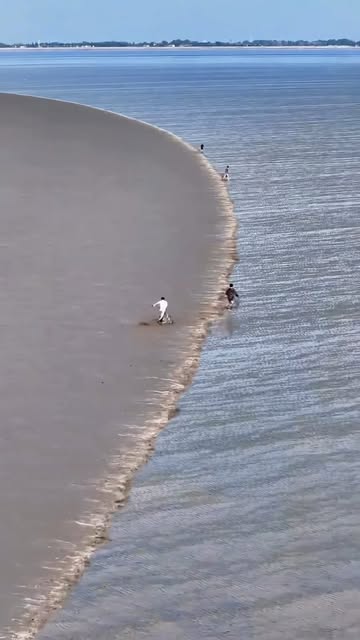
🚨🌊 Pacific vs Atlantic – Oceans That Refuse to Mix 😱🌎 It looks impossible… two massive oceans meeting, yet forming a visible line like they never blend. The Pacific and Atlantic create one of the creepiest ocean illusions on Earth. 🌊 Visible Divide: Different colors and textures form a sharp boundary ⚠️ Density Difference: Variations in salinity and temperature slow mixing 🌡 Layered Waters: Heavier and lighter water masses resist instant blending 💥 Hidden Truth: Beneath the surface, powerful currents are constantly mixing 👁 Optical Illusion: The surface makes it look like two separate oceans 💀 Final Clip: Watch the eerie line where oceans appear divided They don’t actually refuse to mix… they just mix slowly. Science creates this surreal effect — but deep below, the waters are always merging. Still… it feels like two worlds colliding. 💬 Do you think this is pure science… or something more mysterious? 👉 Follow @seaofspecter for more dark ocean mysteries, strange phenomena, and terrifying sea secrets. 🎥 Video Credit: DM for credits/removal to the real owner. . . . #pacificocean #atlanticocean #oceanmystery #scaryocean #deepsea
1,018
Why don't the Atlantic and Pacific oceans mix? The mixing of ocean waters is significantly affected by variations in salinity and temperature. The Pacific Ocean, with its lower salinity levels, meets the saltier waters of the Atlantic, creating a gradient that encourages mixing.Apr 9, 2024 #enjoylife #adventuretravel #atlanticocean #pacificocean

3,695,415
🌊😱 Earth’s Creepiest Ocean Mystery: Why the Pacific & Atlantic Don’t Mix ⚓💀 They meet. They touch. But they refuse to become one. At the edge where oceans collide, something unsettling happens — a visible boundary that looks unnatural… almost alive. 🌊 Different Densities: Salt levels, temperature, and chemistry clash 🌪 Invisible Walls: Powerful currents keep the waters separated ❄️ Cold vs Warm: Each ocean fights to keep its identity 🧪 Nature’s Chemistry: Mixing takes years — sometimes never fully 💀 Creeping Illusion: To the human eye, it looks like the sea is divided It’s not magic. It’s not a myth. But it feels wrong to watch. 💬 Would you sail across waters that refuse to mix beneath your ship? 👉 Follow @oceansspectrum for the darkest ocean mysteries science can’t make less terrifying. . . . #oceanmystery #darkoceans #thalassophobia #creepyocean #oceandanger
Top Creators
Most active in #why-atlantic-and-pacific-don't-mix
Semantic Clustering
Reels Graph Intelligence.
Advanced mapping of high-affinity Instagram Reels semantic patterns identified within the #why-atlantic-and-pacific-don't-mix ecosystem.
Global DensityHigh Velocity
Affinity Score
97%
#why do pacific and atlantic don't mix
High Reach
Affinity Score
94%
#mixing
Strategic
Affinity Score
94%
#dont
Niche Entry
Affinity Score
93%
#pacific
High Reach
Affinity Score
87%
#atlantic
Strategic
Affinity Score
89%
#mixed
Niche Entry
Affinity Score
84%
#atlante
High Reach
Affinity Score
85%
#whi
Strategic
Affinity Score
82%
#mixes
Niche Entry
Affinity Score
81%
#atlantics
High Reach
Affinity Score
77%
#pacifism
Strategic
Affinity Score
74%
#donte
Niche Entry
Strategic Implementation
Our semantic engine has identified these specific pattern clusters as high-affinity matches for #why-atlantic-and-pacific-don't-mix. Integrated usage of #why-atlantic-and-pacific-don't-mix with strategic Reels tags like #why do pacific and atlantic don't mix and #mixing is statistically linked to a significant increase in initial Reels discovery velocity.
In-Depth Hashtag Analysis: #why-atlantic-and-pacific-don't-mix
Expert Review • June 3, 2026 • Based on 12 Reels
Executive Overview
#why-atlantic-and-pacific-don't-mix is an actively used Instagram hashtag. Across the 12 trending reels analyzed on this page, the content has accumulated a combined total of 33,543,788 views— demonstrating exceptional viral potential within this content vertical. The top creator ecosystem features 8 notable accounts, led by @oceanvibes1111 with 29,405,148 total views. The hashtag's semantic network includes 41 related keywords such as #why do pacific and atlantic don't mix, #mixing, #dont, indicating its position within a broader content cluster.
Avg. Views / Reel
2,795,316
33,543,788 totalViral Ceiling
29,405,148
Best Performing ReelUnique Creators
8
12 reels analyzedViewership & Reach Analysis
The 12 reels in this dataset have generated a combined 33,543,788 views, translating to an average of 2,795,316 views per reel. This exceptionally high average viewership indicates that content in this hashtag frequently hits the Explore page or Reels tab, driving massive exposure beyond the creator's immediate follower base.
Top Performing Reel
The highest-performing reel in this dataset received 29,405,148 views. This viral outlier performance is 1052% of the average reel performance in this set. This significant gap between the top performer and the average highlights the "viral lottery" nature of this hashtag — breakout hits can achieve massive scale.
Content Overview & Top Creators
The #why-atlantic-and-pacific-don't-mix ecosystem is dominated by short-form video content (Reels), aligning with Instagram's algorithmic preference for video-first distribution. There are 8 distinct accounts contributing to the trending feed. The top creator, @oceanvibes1111, has contributed 1 reel with a total viewership of 29,405,148. The top three creators — @oceanvibes1111, @oceansspectrum, and @seaofterrors — together account for 99.4% of the total views in this dataset. The semantic network of #why-atlantic-and-pacific-don't-mix extends across 41 related hashtags, including #why do pacific and atlantic don't mix, #mixing, #dont, #pacific. Creators often use these tags together to reach overlapping audiences.
Discoverability & Reach Potential
The discoverability metrics for #why-atlantic-and-pacific-don't-mix indicate an active content ecosystem. The average of 2,795,316 views per reel demonstrates consistent audience reach. For creators using #why-atlantic-and-pacific-don't-mix, high-quality production and strong hooks in the first 1-2 seconds tend to perform best given the competition.
Analyst Verdict
#why-atlantic-and-pacific-don't-mix demonstrates the hallmarks of a well-performing Instagram hashtag. With an average of 2,795,316 views per reel, the viewership metrics position this hashtag as a premium discovery vehicle. Creators like @oceanvibes1111 and @oceansspectrum are leading the charge, setting viewership benchmarks for the community.
Frequently Asked Questions
Everything about #why-atlantic-and-pacific-don't-mix on Instagram
Live Intelligence
Global Reels Trends
Explore high-velocity Instagram Reels hashtags currently shaping global discovery.
Frequently Asked Questions
How popular is the #why atlantic and pacific don't mix hashtag?
Currently, #why atlantic and pacific don't mix has over — public posts on Instagram. It is a highly active community focus area for creators and brands.
Can I download reels from #why atlantic and pacific don't mix anonymously?
Yes, Pikory allows you to view and download public reels tagged with #why atlantic and pacific don't mix without an account and without notifying the content creators.
What are the most related tags to #why atlantic and pacific don't mix?
Based on our semantic analysis, tags like #dont, #pacifers, #pacificly are frequently used alongside #why atlantic and pacific don't mix.